
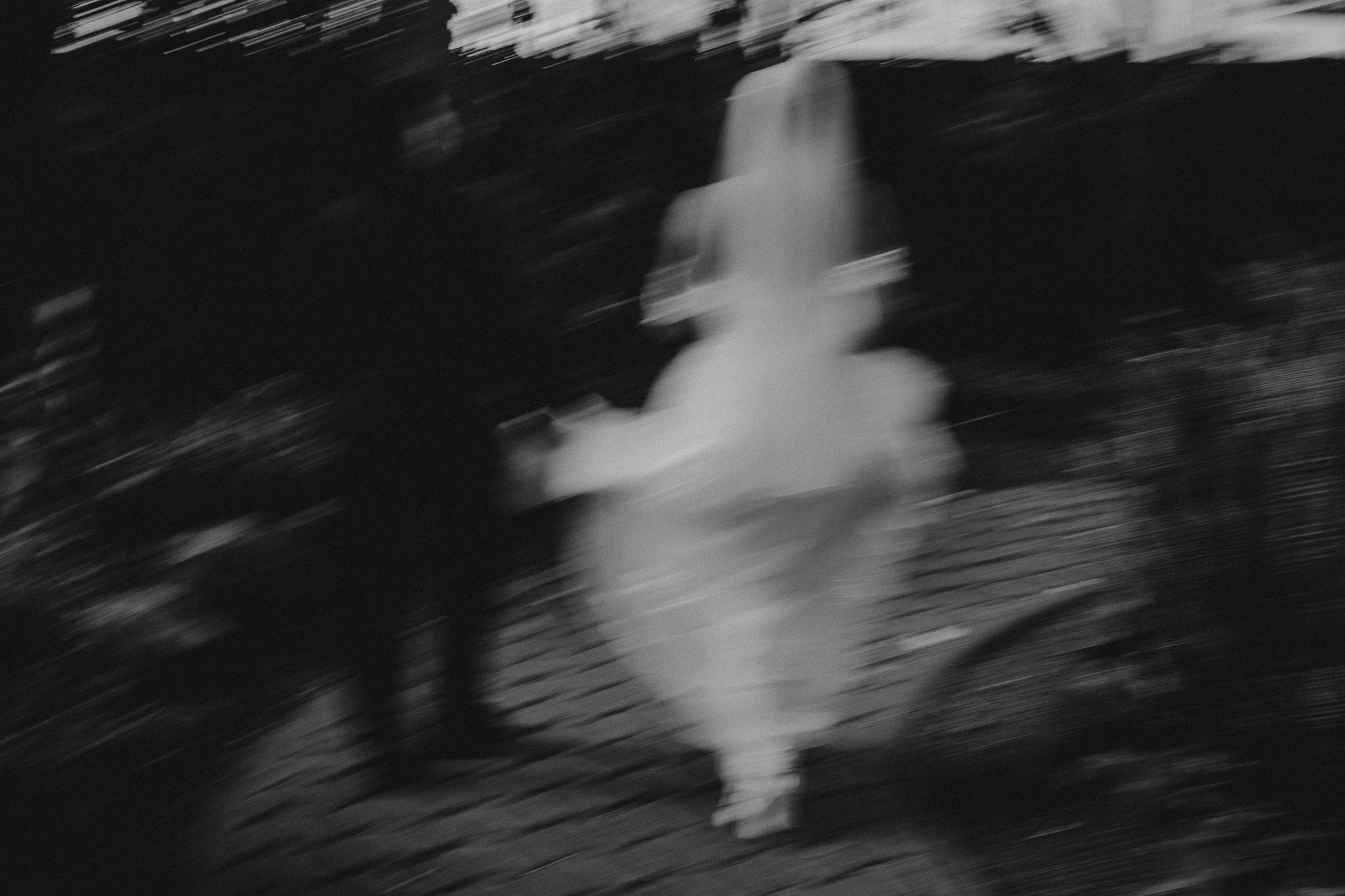
There are moments in history when a culture grows tired of itself.
The fatigue is rarely dramatic. No manifesto announces the end of an era; no public consensus declares that one way of living has been replaced by another. Instead, the transformation reveals itself in small gestures that, taken individually, appear almost insignificant. A restaurant shortens its menu. A hotel removes unnecessary ornament rather than adding more. A traveler chooses to return to the same village instead of crossing three countries in a week. A bride asks whether her grandparents will be comfortable before asking how the ceremony will appear in photographs.
None of these decisions, considered in isolation, seem particularly remarkable. Together, however, they suggest that something deeper may be shifting in the way contemporary society understands value.
For much of the twenty-first century, value became increasingly inseparable from visibility. To be seen was to exist; to circulate widely was to matter. This logic was not invented by social media, although social media perfected it. Modern consumer culture had long relied upon aspiration, but digital platforms transformed aspiration into something immediate and continuous. The extraordinary no longer appeared occasionally, through magazines or cinema or the distant lives of celebrities. It became the background against which ordinary life unfolded. Every morning offered another infinity pool overlooking another coastline, another perfectly composed dinner, another impeccably dressed couple beneath another floral installation suspended above another impossibly elegant table.
The miracle of this technological moment was not that it democratized luxury, as was so often claimed. It democratized the image of luxury. These are not the same thing.
To see extraordinary things has never been easier. To experience them, of course, remains considerably more difficult. Yet the human mind has always struggled to distinguish between familiarity and possession. The more frequently we encounter an image, the less exceptional it appears. Psychologists call this habituation. Economists speak of diminishing marginal returns. Whatever the vocabulary, the consequence is remarkably similar. What once inspired wonder gradually becomes expectation.
This may explain why the last decade produced so many increasingly elaborate experiences and yet so little genuine surprise. The answer to visual saturation was almost always visual escalation. If one celebration featured suspended flowers, the next required a larger installation. If one destination became fashionable, another had to feel more remote. If one dinner consisted of four courses, another required eight. Scale quietly replaced originality because scale remained measurable. It photographed well. It translated across languages. It performed successfully within an economy increasingly organized around attention.
The curious irony is that this pursuit often unfolded beneath the language of authenticity. Rarely has a word been invoked so frequently while proving so difficult to inhabit. Hotels promised authentic experiences carefully calibrated for international travelers. Restaurants celebrated local traditions through interiors that looked strikingly similar from Copenhagen to Mexico City. Weddings became “deeply intentional,” every detail accompanied by an explanation of its personal significance. There was no dishonesty in these gestures. Many were genuinely heartfelt. Yet one cannot help wondering whether authenticity itself slowly became another performance, another quality to be displayed rather than simply lived.
Perhaps the defining characteristic of the social media era was not vanity, as its harshest critics suggested, but self-consciousness. We became accustomed to observing ourselves while we were living. Experiences acquired a second existence almost simultaneously with the first. A conversation became a photograph before it became a memory. A journey became an itinerary. A meal became documentation. Even solitude increasingly arrived with the possibility of publication.
The philosopher Guy Debord argued, more than half a century ago, that modern societies increasingly substitute direct experience with representation. He could hardly have imagined the technological forms this representation would eventually assume, yet his observation now feels strangely prophetic. We have become extraordinarily skilled at producing images of meaningful lives. Whether we have become equally skilled at inhabiting those lives is a more complicated question.
It is perhaps no coincidence that this cultural uncertainty emerges just as artificial intelligence begins generating beauty with astonishing ease. Today, a wedding that never occurred can be rendered with remarkable plausibility. A Tuscan villa can be invented. A floral installation can be imagined. A family portrait can be synthesized. The image, once considered evidence, no longer guarantees reality. Paradoxically, the easier representation becomes, the more valuable reality itself begins to feel.
One begins to notice subtle changes. Not in aesthetics alone, but in priorities.
Couples who once spoke primarily about design increasingly ask about time. How long should the cocktail hour last? How can everyone actually speak to one another? Is there space for children to run? Can grandparents remain close to the ceremony? The questions sound logistical, but they reveal something much deeper. They concern presence rather than presentation.
This is why it would be misleading to describe contemporary weddings simply as becoming more “authentic.” Authenticity has been fashionable for years. What appears different now is not the language but the longing behind it. After decades spent perfecting the representation of experience, many people seem quietly exhausted by the necessity of documenting their own lives as they unfold. They are not abandoning beauty. They are rediscovering attention.
Perhaps that is what family has come to represent. Not tradition in the nostalgic sense, but the last place where experience still resists performance. A grandmother’s embrace is valuable precisely because it cannot be optimized. A father’s hesitation before a speech cannot be generated by an algorithm. A conversation that continues long after dinner has ended possesses no obvious visual climax and therefore almost no value within the economy of content. Yet these are often the moments that remain longest in memory.
It may be tempting to interpret this as a rejection of technology or social media. It is neither. Images will continue to matter. Photography will remain one of the great archives of human celebration. Influence itself is unlikely to disappear. The more interesting possibility is that influence may be losing its authority over meaning. We increasingly understand that a beautiful image and a meaningful experience are related, but they are not interchangeable.
Perhaps every culture eventually reaches a point where it recognizes that the things most worth preserving cannot always be displayed. Presence, unlike performance, refuses optimization. It asks only that we remain where we already are.
If this is indeed the direction in which celebrations are moving, then the future of weddings may have surprisingly little to do with trends. Their greatest luxury may no longer lie in what they reveal to the world, but in what they allow the people within them to experience together.


